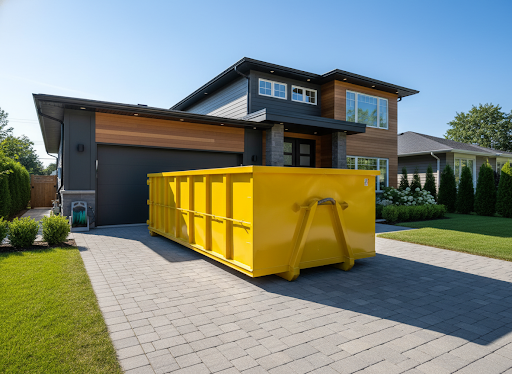
The 10-yard and 20-yard are the two sizes most homeowners end up choosing between. They look similar on a driveway, but the difference in capacity is bigger than the names suggest — and picking wrong means either a wasted half-empty box or a second pickup you have to pay for.
Capacity and dimensions
Both have the same footprint width, so they fit on a standard driveway. The 20-yard is longer and noticeably taller, which means twice the volume for bulky debris.
- 10-yard — roughly 12 ft long × 8 ft wide × 3.5 ft high. Holds about 3 pickup-truck loads. Included weight: 1 ton.
- 20-yard — roughly 16 ft long × 8 ft wide × 4.5 ft high. Holds about 6 pickup-truck loads. Included weight: 2 tons.
What each size is best for
- 10-yard: bathroom remodel, small garage or closet cleanout, deck removal, a single room of flooring, or any job with heavy/dense debris (concrete, dirt, tile) where weight maxes out before volume does.
- 20-yard: kitchen remodel, two-car garage cleanout, large yard or storm cleanup, roofing on a small home, or a whole-room renovation with cabinets and furniture.
Weight is the deciding factor for heavy debris
If your debris is heavy — concrete, dirt, brick, tile, or roofing shingles — you'll usually hit the weight limit long before you fill the box. In that case a 10-yard with its 1-ton allowance may be the right call even for a larger-looking job, because a 20-yard full of concrete would blow past its limit and rack up overweight fees.
For light, bulky debris — furniture, drywall, packaging, yard waste — volume runs out first, so the 20-yard's extra room is what you're paying for.
Price difference
In Contra Costa County, BookingDumpsters lists the 10-yard from $664 and the 20-yard from $749 for a 7-day rental when you book a week or more ahead (shorter-notice deliveries cost a bit more). The $85 gap buys you double the volume and an extra ton of weight allowance, which is why the 20-yard is our most-booked size: for many projects it's cheaper than risking a second haul.
A simple rule of thumb
If you can comfortably picture your debris fitting in three pickup loads and it's not unusually heavy, book the 10-yard. If you're on the fence, or the job involves furniture and bulky items, the 20-yard is the safer bet. Still unsure? Reserve online and use our size helper, or message us — we'd rather get you the right box than the bigger invoice.